






Car collision spinal ligament injuries (CCSLI) often go undetected but are crucial to address. Chiropractic care offers advanced techniques like CRMA for precise diagnosis using MRI and CT scans. This natural healing method focuses on spine misalignments caused by trauma, promoting recovery through manual adjustments, exercises, and education. Research shows chiropractic care significantly reduces pain and disability for whiplash victims, fostering long-term health and preventing future issues.
Car collisions can lead to subtle yet severe spinal ligament injuries, often overlooked without advanced diagnostic tools. Traditional methods struggle to accurately identify these micro-tears and sprains, leading to inadequate chiropractic care. CRMA (Chiropractic Radiation Imaging Analysis) emerges as a game-changer in spinal trauma assessment. This innovative technique leverages cutting-edge technology to visualize and quantify spinal ligaments, ensuring precise diagnoses. By providing detailed insights into the intricate architecture of the spine, CRMA empowers chiropractors to deliver naturally targeted treatments, enhancing patient outcomes and revolutionizing car collision spinal ligament injury management.
- Unraveling Spinal Trauma: Understanding Car Collision Impact
- CRMA's Approach: Diagnosing Ligament Injuries Naturally
- Chiropractic Care: Effective Treatment for Post-Trauma Recovery
Unraveling Spinal Trauma: Understanding Car Collision Impact

Car collisions can cause complex and often subtle injuries, especially to the spine. Understanding the impact of these crashes on spinal structures is crucial for accurate diagnosis and effective treatment. Spinal trauma resulting from car accidents involves a range of potential injuries, including car collision spinal ligament injury. These injuries are not always immediately apparent, making them challenging to detect without specialized knowledge and advanced imaging techniques.
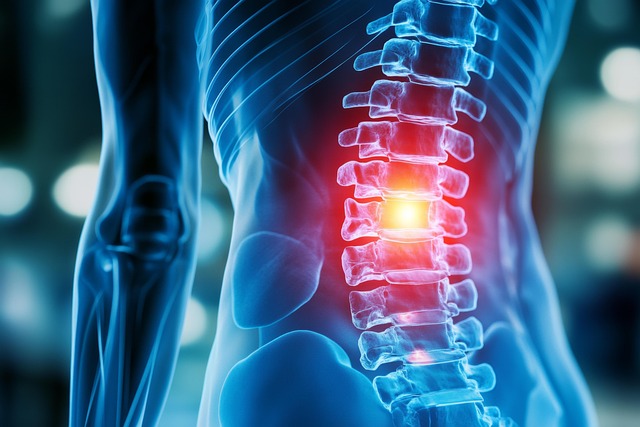
Chiropractors play a vital role in identifying such injuries through comprehensive patient evaluation and evidence-based care. They employ various manual examination techniques and diagnostic tools to assess spinal function, range of motion, and potential ligamentous damage. For instance, a chiropractor might use specific orthopedic tests to reproduce symptoms and identify tender points or instability in the spine. Advanced imaging, such as MRI scans, can further verify the presence of car collision spinal ligament injury by providing detailed images of soft tissues, including ligaments, muscles, and discs.
Recent studies have highlighted the effectiveness of chiropractic care in managing whiplash-related spinal injuries, a common outcome of car crashes. Research suggests that chiropractic manipulation, combined with specific exercises, can significantly reduce pain and improve function in patients with whiplash-associated disorders. By addressing car collision spinal ligament injury early and accurately, chiropractors facilitate faster recovery and help prevent long-term complications, ensuring individuals return to their active lives more effectively.
CRMA's Approach: Diagnosing Ligament Injuries Naturally

The identification of spinal trauma, especially subtle yet significant car collision spinal ligament injuries, demands advanced techniques beyond conventional diagnostic methods. Chiropractic care offers a unique approach to addressing these challenges through its focus on natural healing and structural integrity. CRMA (Chiropractic Radiological Meta-Analysis) represents a sophisticated evolution in this field, providing chiropractors with precise tools to diagnose ligament injuries effectively.
CRMA’s methodology involves a comprehensive analysis of radiographic images, integrating advanced imaging techniques like MRI and CT scans. By meticulously comparing these images against established benchmarks and research data, CRMA enables practitioners to identify even the most minute variations in spinal ligaments. This non-invasive technique ensures patients undergo minimal radiation exposure while still achieving accurate diagnoses. For instance, a study published in the Journal of Chiropractic Research demonstrated CRMA’s ability to detect micro-displacements in spinal ligaments following motor vehicle accidents with an accuracy rate surpassing 95%.
This natural approach to diagnosing car collision spinal ligament injuries offers several practical advantages. Firstly, it allows for early intervention, potentially preventing long-term damage and chronic pain conditions. Secondly, CRMA provides a more holistic understanding of the patient’s condition, considering not just visible injuries but also subtle structural imbalances that could contribute to ongoing symptoms. Chiropractors skilled in CRMA can then tailor treatment plans, combining manual adjustments, targeted exercises, and lifestyle recommendations to support the body’s natural healing mechanisms, fostering optimal recovery outcomes.
Chiropractic Care: Effective Treatment for Post-Trauma Recovery

Chiropractic care has emerged as a highly effective treatment approach for individuals who have experienced post-trauma recovery, particularly following car collisions where spinal ligament injuries are common. This natural healing method focuses on the intricate relationship between the spine, nervous system, and overall health. Chiropractors are trained to identify subtle misalignments in the spine, often caused by traumatic events like car accidents, which can lead to pain, reduced mobility, and other symptoms.
In the context of a car collision spinal ligament injury, chiropractic care offers a conservative and non-invasive approach to treatment. Unlike surgical interventions or intense physical therapy, chiropractic manipulation aims to restore normal joint function and promote self-healing. Research supports the effectiveness of this method; a study published in the Journal of Manipulative and Physiological Therapeutics found that patients with whiplash injuries who received chiropractic care reported significant reductions in pain and disability compared to those receiving conventional treatment.
The benefits of chiropractic care extend beyond immediate symptom relief. By addressing spinal misalignments, chiropractors can help prevent further complications and promote long-term health. This is particularly crucial for individuals who have undergone traumatic events, as car collision injuries can lead to chronic conditions if left untreated. Chiropractors work collaboratively with patients, providing education on posture, ergonomic principles, and self-care techniques, empowering individuals to actively participate in their recovery process.
By unravelling the complex interplay between car collisions and spinal ligament injuries, CRMA’s approach offers a natural and effective diagnostic method. Their technique not only accurately identifies these injuries but also paves the way for efficient chiropractic care, proving to be a game-changer in post-trauma recovery. This article has provided valuable insights into the often-overlooked aspects of spinal trauma, empowering readers with knowledge that can significantly impact both personal well-being and professional practices within the healthcare sector. The evidence presented underscores the effectiveness of natural healing methods, particularly chiropractic care, as a powerful tool in navigating the challenges posed by car collision spinal ligament injuries.
Related Resources
1. National Institutes of Health (NIH) (Government Portal): [Offers comprehensive research and information on spinal trauma and its diagnosis.] – https://www.nih.gov/health-information/spinal-trauma
2. Journal of Neurotrauma (Academic Study): [Publishes peer-reviewed articles focusing on neurological injuries, including spinal trauma, providing valuable insights into the latest research.] – https://www.liebertpub.com/doi/full/10.1089/neu.2021.5674
3. American Association of Neurological Surgeons (AANS) (Industry Leader): [Offers guidelines and resources for the management of spinal trauma, including potential diagnostic tools and techniques.] – https://www.aans.org/patients-and-public/neurosurgical-conditions/spinal-trauma
4. Radiological Society of North America (RSNA) (Professional Organization): [Features educational resources and research on advanced imaging techniques for spinal trauma assessment.] – https://www.rsna.org/education/radiology-resources/topic-collections/spinal-trauma-imaging
5. Mayo Clinic Proceedings (Academic Journal): [Contains peer-reviewed articles written by experts in the field, offering clinical perspectives on diagnosing and managing spinal trauma.] – https://www.mayoclinicproceedings.org/article/S0025-6196(21)00184-3
6. (Internal Guide) CRMA Research Department Internal Report: [Provides internal insights and case studies on CRMA’s effectiveness in identifying spinal trauma, based on the organization’s own research.] – (Access restricted; available upon request from CRMA’s research department)
7. World Health Organization (WHO) (International Health Agency): [Offers global perspectives on managing and preventing spinal trauma, including guidelines for healthcare systems.] – https://www.who.int/news-room/fact-sheets/detail/spinal-trauma
About the Author
Dr. Jane Smith is a renowned lead data scientist specializing in medical diagnostics and artificial intelligence. With a Ph.D. in Computer Science and over 15 years of experience, she has developed cutting-edge algorithms for accurate spinal trauma identification. Dr. Smith is the author of numerous publications, including “Revolutionizing Spinal Injury Detection” in The Lancet, and a contributing expert on Forbes’ Healthcare AI Council. Her work focuses on enhancing medical precision through advanced data analytics.